 Skip to content

Erasmus+ Courses in Porto, Portugal
Discover Erasmus+ KA1 structured courses and teacher training in Porto, northern Portugal. Build practical skills in AI and digital education, inclusive teaching, languages, wellbeing and leadership while exchanging ideas with educators from across Europe.
Find Erasmus+ teacher training in Porto
Search structured courses and KA1 training sessions in Porto.
Upcoming Erasmus+ courses in Porto
Explore a selection of upcoming Porto training editions. Course status and dates can change; always confirm details in the official calendar before registering.
Explore Erasmus courses for teachers in Porto
Choose practical professional development courses in Porto to support your school’s Erasmus+ mobility objectives and teaching priorities.
AI & Digital Education
Explore AI tools, digital pedagogy and creative technologies through practical approaches for teaching and learning.
Explore digital & AI coursesInclusion & Intercultural Education
Develop inclusive strategies, intercultural understanding and approaches that help diverse learners participate and thrive.
Explore inclusion coursesWellbeing & Outdoor Education
Discover approaches to teacher wellbeing, stress management and experiential learning in and beyond the classroom.
Explore wellbeing coursesLeadership, Communication & Soft Skills
Build leadership, teamwork, conflict management and effective communication skills for education settings.
Explore soft skills coursesLanguage Learning & CLIL
Explore language development, multilingual teaching and CLIL approaches that support communication and learning across subjects.
Explore language coursesSTEM/STEAM & Sustainability
Discover inquiry-based science, hands-on STEAM methods and sustainability education for engaging learning experiences.
Explore STEM & sustainability coursesWhy choose Porto for Erasmus+ teacher training?
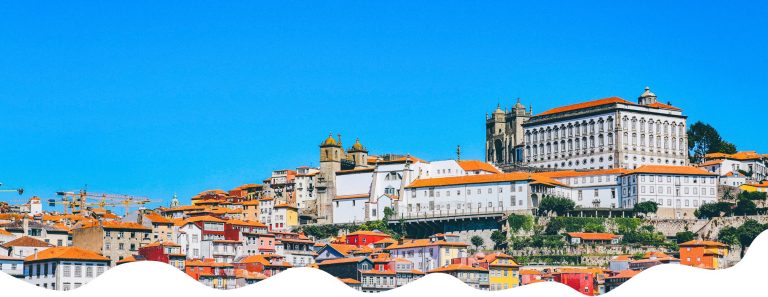
Combine hands-on learning and European professional exchange with Porto’s riverside heritage, walkable centre, creative culture and distinctive northern Portuguese character.
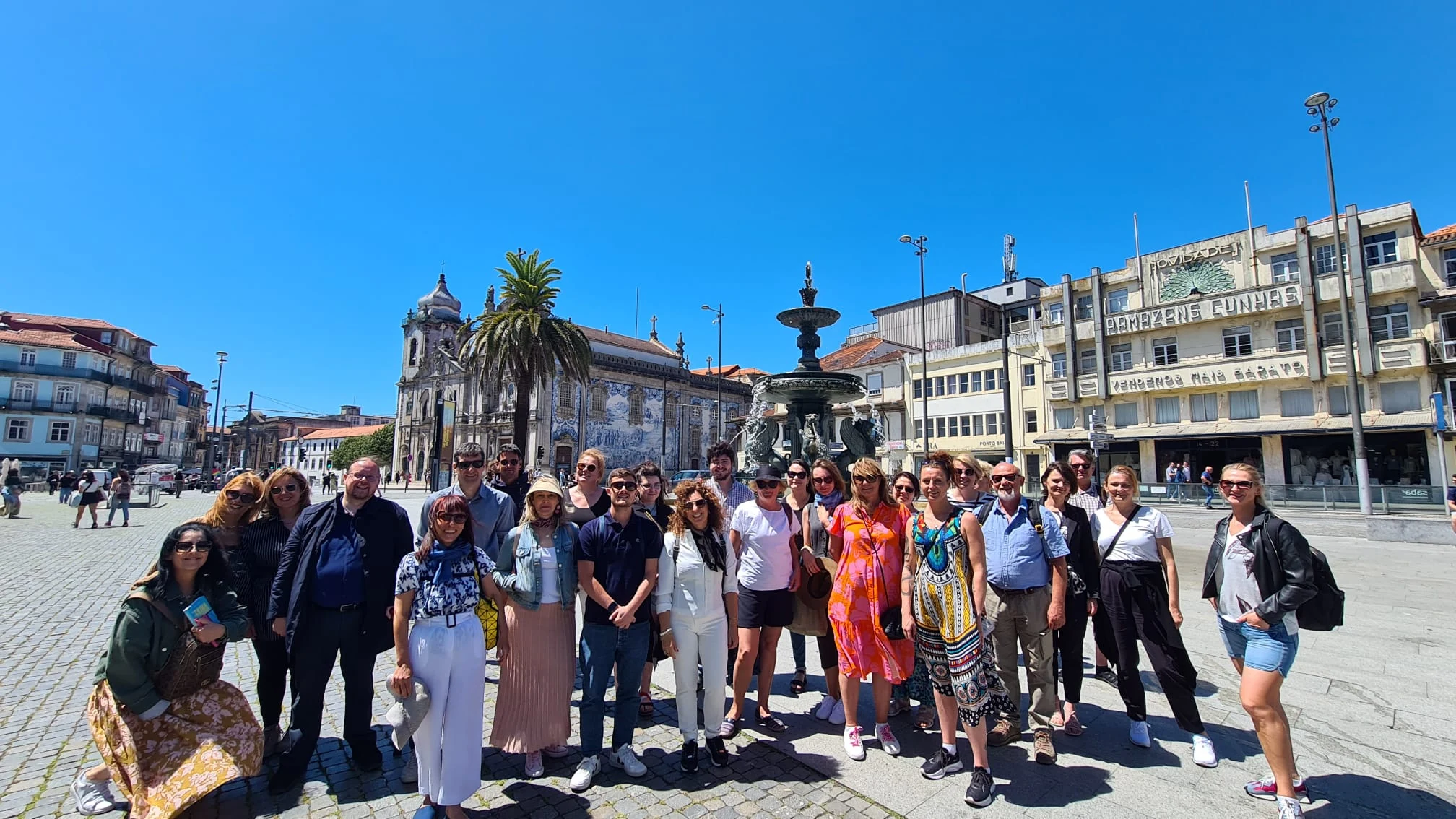
European learning community
Connect with teachers, trainers and school leaders from across Europe and exchange approaches you can use back at your institution.
UNESCO-listed city centre
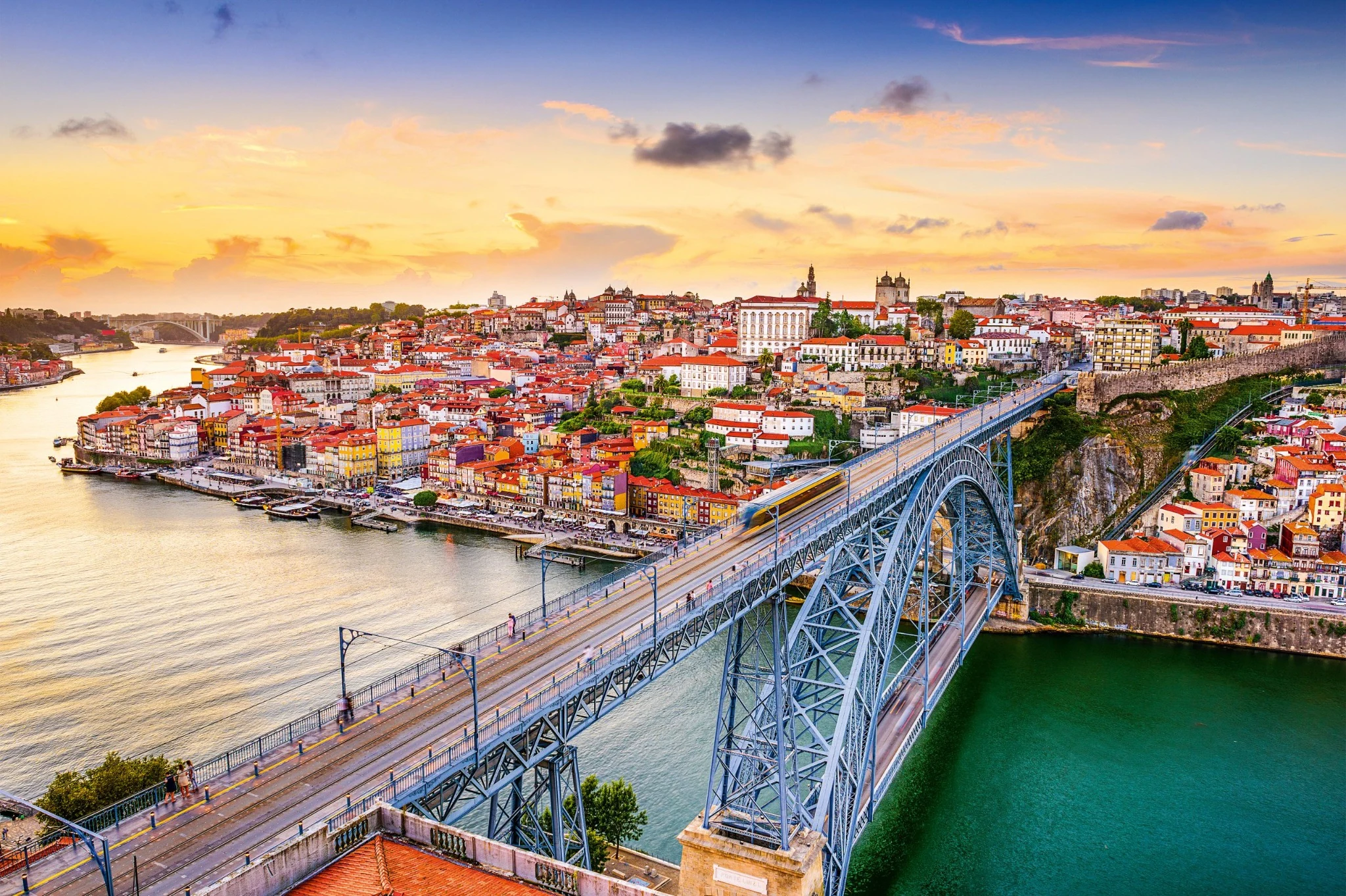
Discover the historic centre of Porto, the Luiz I Bridge and the Monastery of Serra do Pilar, recognised together as a UNESCO World Heritage property.
Practical professional growth
Work with trainers through interactive workshops and peer learning focused on practical classroom and school-wide applications.
Culture by the Douro
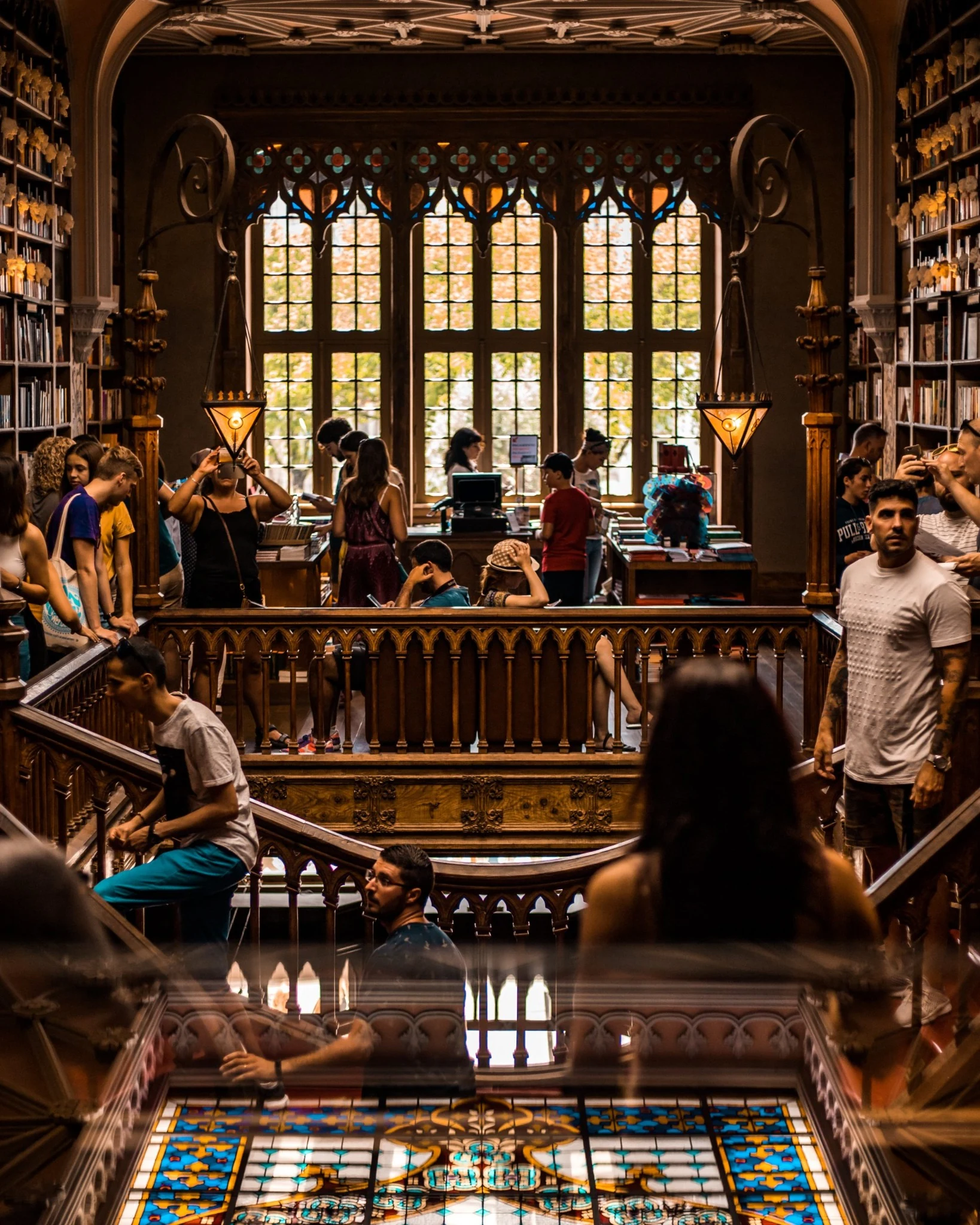
Explore riverside neighbourhoods, local museums, bookshops and Porto’s lively artistic scene after morning training.
Learn in Porto. Take new ideas home.
From Ribeira and the Douro to tiled railway halls and contemporary museums, Porto offers a rich setting for intercultural learning, thoughtful professional exchange and new perspectives.
A city shaped by trade, ideas and the Douro.
Founded in 1123, Porto’s layers of Roman heritage, medieval trade and riverside traditions give the city a distinctive identity to explore between training sessions.
Portus Cale and the riverside city
Porto’s name is linked to the Roman-era port settlement and gave origin to the country's name, Portugal, pointing to its significance in the nation's identity. The cathedral area, medieval street pattern and early river trade reveal a city shaped by movement and exchange.
Discover more +
The Porto waterfront developed around the Douro estuary, while medieval streets and fortified areas helped form the historic centre. The Romanesque core of Porto Cathedral dates to the 12th century.
Commerce, architecture & resilience
Porto’s commercial identity grew along the Douro, while baroque and neoclassical architecture transformed its streets and public spaces.
Discover more +
The nickname “Invicta” reflects Porto’s association with resistance during the 19th-century Liberal Wars. Landmarks such as Clérigos and Palácio da Bolsa reflect different chapters of the city’s development.
A living UNESCO heritage city
Porto’s historic centre, Luiz I Bridge and Serra do Pilar form a UNESCO World Heritage site, yet this heritage remains part of a busy, contemporary city.
Discover more +
Recognised by UNESCO in 1996, the historic centre combines monuments, neighbourhoods and an urban landscape shaped by the Douro. Contemporary art, design and cultural initiatives add new dimensions to a city rooted in history.
Plan your Erasmus+ training with confidence.
Practical guidance for teachers, school leaders and Erasmus+ coordinators preparing a staff mobility to Porto, Portugal.
Who can participate?
Our structured courses are designed for educators and education professionals. Check each programme for its intended audience, teaching language and recommended entry level.
Course format and learning outcomes
Training normally combines interactive workshops, collaborative activities, professional exchange and practical methods to apply after returning home. Exact duration, daily schedule, objectives and included cultural activities are shown on individual course pages.
Erasmus+ funding and course fees
Erasmus+ grant support: Depending on your approved mobility project and applicable Erasmus+ rules, funding may cover course fees and contribute towards travel and individual support for accommodation and meals. Your sending organisation confirms eligibility, grant amounts and reimbursement conditions.
Included in our course fee: Structured training, pedagogical and mobility coordination, course administration, training-related logistics, teaching methodologies, learning materials and applicable course documentation and certification.
Not included: Flights, accommodation, meals and personal expenses. We provide destination guides, practical travel information and accommodation suggestions to help participants plan their stay.
Certificates and documentation
Learning Together supports course-related mobility documentation and certificates, subject to participation and applicable requirements. Discuss Learning Agreements and Europass documentation with your mobility coordinator.
Everything you need for your stay.
Plan your arrival, your accommodation and the time you have to discover Porto between course activities.
Getting here & local transport
Francisco Sá Carneiro Airport (OPO) is Porto’s main international gateway. The city centre is accessible by metro, taxi and ride-hailing services.
- Airport to Porto: Metro Line E (purple) connects Aeroporto with Trindade. Check current operating times, tickets and any service changes before travelling.
- From Trindade: Metro connections and city buses link the main central districts; many training areas can also be reached on foot.
- Rail: São Bento and Campanhã stations provide regional and national train connections.
- Walking: The historic centre is compact but hilly, with cobblestone streets and steps. Allow extra time if you need an accessible route.
Accommodation & stay
Once your course is confirmed, Learning Together can share practical accommodation suggestions around central Porto, including hotels, guesthouses and apartments.
- IMPORTANT: Do not book flights or accommodation until you have contacted Learning Together, completed the full registration process and received written confirmation of the course, dates and training venue.
- Where to stay: Central areas such as Trindade, Aliados and Bolhão can be convenient depending on the confirmed course location.
- Training venue: The exact venue and meeting instructions are provided for your edition. Do not assume the back-office address is the classroom location.
Northern Portuguese food & culture
Porto’s food traditions range from market cafés and regional dishes to neighbourhood bakeries and riverside dining.
- Local dishes: Francesinha, caldo verde, bacalhau and regional petiscos.
- Local flavours: Discover traditional bakeries, markets such as Mercado do Bolhão and the Douro’s gastronomic heritage.
- Across the river: Vila Nova de Gaia is associated with historic Port wine lodges and panoramic viewpoints.
What to see & do
Porto offers a wide range of heritage visits, museums and outdoor experiences for free afternoons and weekends.
- Historic Porto: Ribeira, São Bento station, the cathedral, Clérigos Tower, Palácio da Bolsa and the Luiz I Bridge.
- Art and green space: Serralves Museum and gardens, Palácio de Cristal gardens and the riverside walks of Foz do Douro.
- Local tradition: Explore the São João celebration in June, neighbourhood festivals and craft markets when they coincide with your visit.
Inspiration beyond the classroom.
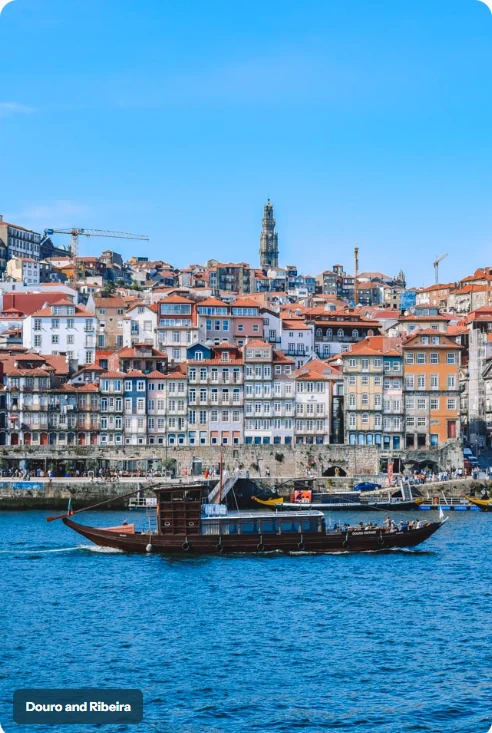
From Ribeira to the Douro waterfront, Porto’s heritage and everyday city life create a memorable setting beyond the training room.
Erasmus+ Porto FAQs.
Key questions about Erasmus+ KA1 courses, dates, documentation and mobility arrangements in Porto.
Where do Learning Together’s Erasmus+ courses in Porto take place?
Training venues are selected for each edition in accessible areas of Porto. The exact venue and address are confirmed in writing after registration. Please do not book travel or accommodation before receiving course confirmation.
Can our Erasmus+ KA1 grant support teacher training in Porto?
Eligible staff mobility may support participation in structured professional-development courses, subject to your approved Erasmus+ project and current programme rules. Your sending organisation confirms eligibility, funding and reimbursement conditions.
Where can we check confirmed Porto course dates?
Use the official Learning Together calendar and check the relevant course page.
What is the duration of courses in Porto?
Porto programmes may have different durations, commonly five or six training days depending on the course and edition. Always consult the individual course page for its exact schedule, learning outcomes and included cultural activities.
Are flights, meals and accommodation included in the course fee?
No. The course fee covers structured training, pedagogical coordination, course administration, learning methods and materials and applicable course documentation. Flights, accommodation and meals are not included. Erasmus+ funding may contribute to eligible costs under your sending institution’s approved grant.
Can schools send several teachers or ask about mobility documents?
Yes. Schools and educational organisations can enquire about group places, Learning Agreements, certificates and Europass-related documentation. Our coordination team will explain what applies to your mobility.
Considering another Erasmus+ destination?
Explore Erasmus+ teacher training and mobility destinations in Portugal, Spain and Poland, and compare the learning environment that best suits your team.
Your next Erasmus+ experience could start in Porto.
Find a training programme, exchange ideas with European educators and discover northern Portugal.
All Courses in Porto
 ◷
5 / 6 days
Teaching with AI – Tools and Techniques
Test AI tools for lesson planning, classroom resources and teaching techniques. Explore critical evaluation and practical integration in daily lessons.
 ◷
5 / 6 days
ChatGPT – How to Handle AI in Schools
Practise using ChatGPT and generative AI for lesson planning, classroom activities and responsible school use. Review accuracy, ethics and digital literacy.
 ◷
5 / 6 days
Outdoor Education – Nature as a Learning Space
Design inclusive outdoor learning activities using nature as a classroom. Explore place-based teaching, collaboration and reflection.
 ◷
5 / 6 days
AI for Innovative Teaching: Writing, Video, Audio
Produce teaching resources with generative AI for writing, images, audio and video. Explore creative lesson design, accessibility and responsible use.
 ◷
5 days
Wellbeing First – Stress Relief Strategies
Practise accessible stress-relief techniques, reflection and wellbeing routines for educators facing classroom demands and professional overload.
 ◷
5 / 6 days
Wellbeing Outdoors – Mind, Health and Stress Relief
Combine nature, movement and reflective activities for educator wellbeing. Explore inclusive outdoor practices and practical stress-management ideas.
 ◷
5 / 6 days
AI Assistant for Teachers and Trainers
Explore AI assistants for lesson planning, communication and workload management. Practise responsible use of ChatGPT, Copilot and related tools.
 ◷
5 days
Positive Learning and Wellbeing in Schools
Explore positive education, classroom belonging and practical wellbeing routines. Build strategies that support participation and relationships.
 ◷
5 / 6 days
Stress Management Through Mindfulness, Yoga, and Meditation
Practise mindfulness, yoga and meditation techniques for stress awareness and educator wellbeing, with ideas to adapt appropriately to schools.
 ◷
5 days
AI Chatbots in Education
Build and evaluate educational AI chatbots and virtual tutors with accessible no-code tools. Explore personalised support, privacy and classroom use.
 ◷
5 days
Cheerful Classroom – Joy in Learning
Explore positive classroom routines, motivation and creative activities that support joyful, participatory learning and stronger teacher-student relationships.
 ◷
6 days
There is No Planet B
Explore climate literacy and environmental responsibility through practical sustainability education and school action-planning activities.
 ◷
5 days
AI Prompt Engineering for Educators
Develop reusable prompts for lesson planning, feedback and classroom resources. Practise prompting frameworks, quality checks and responsible AI use.
 ◷
6 days
Green Future – Mapping a Plastic-Free Living
Explore plastic pollution and circular-economy education. Design student activities and school actions for reducing waste and improving sustainability.
 ◷
5 / 6 days
Building a Sustainable Future
Explore climate awareness and environmental education through collaborative activities. Design practical sustainability ideas for your school.
 ◷
5 days
Educating Climate Changemakers
Equip students to investigate climate challenges and design practical action. Explore participatory climate education and student-led projects.
 ◷
5 days
Green Education and Sustainable Practices
Develop environmental learning activities and practical sustainability projects with colleagues. Explore school actions that support greener habits.
 ◷
5 / 6 days
Sustainable Schools – Reducing Waste
Explore school waste reduction and sustainability education. Design practical student projects that promote responsible consumption and action.
 ◷
6 days
A Guide to Social Media Ads for Educational Institutions
Learn to plan Meta and Instagram ad campaigns for educational institutions, define audiences and review results in practical workshops for school staff.
 ◷
5 / 6 days
Advanced AI Assistant – Workflows and Automation
Design responsible AI assistants and auditable workflows for schools. Practise knowledge grounding, no-code automation and human oversight in this advanced course.
 ◷
5 / 6 days
Advanced AI in Education – Multimodal Media Production
Create coherent educational media using AI text, images, audio and video. Develop accessible production workflows with editorial and ethical oversight.
 ◷
5 / 6 days
Advanced English Training (B2 to C1)
Improve professional English fluency, accuracy and communication through discussions, presentations and intercultural practice with European peers.
 ◷
5 / 6 days
Advanced Teaching with AI – Pedagogy and Assessment
This training course aims to equip educators with a robust understanding of Artificial Intelligence (AI) and Information and Communication Technology (ICT) as transformative tools in educational settings.
 ◷
5 / 6 days
AI for All – Inclusion in Education and Work
Use assistive AI tools to improve accessibility and inclusion in education and work. Practise captioning, translation and adaptive learning support.
 ◷
5 / 6 days
Art Therapy for Wellbeing and Communication
Explore creative arts activities for emotional expression, educator wellbeing and communication. Practise adaptable, inclusive methods for learning settings.
 ◷
6 days
Audiovisual Tools for the Digital Teacher
Create and adapt videos, audio and visual resources for more engaging teaching. Practise audiovisual production and classroom integration.
 ◷
6 days
Bullying and Cyberbullying
Explore practical school strategies to recognise bullying, respond to cyberbullying and build safer learning environments for students.
 ◷
5 days
CLIL Techniques and ICT
Apply CLIL principles and digital tools to language-rich subject teaching. Practise the 4Cs framework, lesson planning and multilingual classroom activities.
 ◷
5 / 6 days
Coaching – A Powerful Tool
Explore the GROW model, active listening and effective questioning. Practise coaching conversations that support motivation and professional relationships.
 ◷
6 days
Collaborative ICT Tools – Project Management in Schools
Learn to organise school projects and teamwork with collaborative digital tools. Practise shared planning, communication and online project workflows.
 ◷
5 days
Communicating with Impact
Strengthen persuasive, clear and inclusive communication in classrooms, staff meetings and European projects through practical exercises and feedback.
 ◷
5 days
Communicative Skills for European Teachers
Develop classroom communication, active listening and interpersonal skills. Explore practical approaches for working with students, parents and colleagues.
 ◷
6 days
Computational Thinking and Programming (Python) in Math Classes
Explore Python, algorithms and computational thinking to strengthen mathematics teaching through hands-on problem solving and classroom tasks.
 ◷
5 / 6 days
Conflict Management in Schools
Learn to recognise school conflicts, develop constructive responses and practise mediation and communication strategies for safer school relationships.
 ◷
5 days
Creating Emotionally Safe Classrooms
Create emotionally supportive classrooms with practical routines for trust, inclusion and positive relationships. Explore ways to respond to learner needs.
 ◷
6 days
Creativity in Education
Develop creative thinking and classroom activity design. Practise techniques that support learner curiosity, engagement and flexible problem solving.
 ◷
5 / 6 days
Critical Thinking and Problem Solving in Education
Teach evidence evaluation, reasoning and structured problem solving with classroom routines, discussion protocols and authentic challenges.
 ◷
5 days
Data Privacy and GDPR for Schools
Review school data protection, student records and privacy risks associated with digital tools and AI. Develop a practical institutional action plan.
 ◷
6 days
Design Thinking for the Greater Good
Use human-centred design thinking to explore education challenges, develop ideas and prototype solutions with colleagues through collaborative workshops.
 ◷
6 days
Digital Competences in Education
Develop digital teaching skills and explore DigCompEdu-informed methods to select, adapt and integrate ICT resources into classroom practice.
 ◷
5 / 6 days
Digital Competences, Innovation and Lifelong Learning for Educational Staff
Strengthen digital collaboration, organisational practice and lifelong learning strategies for teaching and educational administration teams.
 ◷
6 days
Digital Marketing Strategies for Schools
Improve school communication and visibility through websites, digital channels and audience-focused marketing plans. Explore practical school campaigns.
 ◷
5 days
Digital Pedagogy and AI Innovation
Use AI tools and digital pedagogy to plan engaging lessons, assess learning and make informed ethical decisions in classroom practice.
 ◷
5 / 6 days
Digital Technologies for the Creative Classroom
Create engaging classroom activities with video, images, sound and interactive digital tools. Explore creativity, accessibility and student participation.
 ◷
5 / 6 days
E.U. and I – Active Citizenship and Identity
Explore European identity, shared values and active citizenship through participatory activities and intercultural discussion for education settings.
 ◷
5 days
Early Childhood Innovation in STEM
Bring low-screen STEM activities into kindergarten and early primary learning. Practise age-appropriate inquiry, making and problem-solving tasks.
 ◷
5 / 6 days
Educational Leadership
Develop collaborative leadership, school culture and constructive conflict approaches through practical scenarios and European peer exchange.
 ◷
6 days
Educational Uses of Digital Storytelling
Create narrated photo and video stories to support communication, creativity and meaningful learning. Practise digital storytelling workflows for class.
 ◷
6 days
EduEscapeRoom – Immersive Experiences with AI
Design collaborative classroom escape-room challenges with puzzles, gamification and AI-supported creative activities for active learning.
 ◷
5 / 6 days
Emotional Intelligence
Develop emotional self-awareness, regulation and empathy in school relationships. Practise strategies for classroom communication and wellbeing.
 ◷
5 days
Empathic Communication – Listen, Engage, Inspire
Practise active listening, empathy and inclusive conversations to strengthen understanding with students, families and multicultural school teams.
 ◷
6 days
English as a Foreign Language – B Level
Improve English language fluency through immersive speaking, listening and practical communication tasks for international professional settings.
 ◷
6 days
Enhancing Communication in the English Language Classroom
Develop communicative language-teaching methods to encourage student talk, interaction and confidence in English lessons through practical activities.
 ◷
6 days
Film, Media Literacy and Active Citizenship
Use short films to help learners explore citizenship, question how media shape their views and take part in discussions about issues that affect them.
 ◷
6 days
Future Classroom – Apps for Education
Explore creative educational apps and practical ICT activities to support interactive teaching, classroom engagement and digital lesson design.
 ◷
6 days
Game Based Learning vs Gamification
Compare game-based learning with gamification and design engaging classroom activities using challenges, feedback and game mechanics.
 ◷
5 days
Gestión del Estrés con Yoga y Meditación
Aprende estrategias prácticas de yoga, atención plena y meditación para gestionar el estrés docente y favorecer el bienestar profesional.
 ◷
5 days
Hablar en Público en la Enseñanza y Liderazgo Consciente
Mejora la expresión oral, las presentaciones y la comunicación en el ámbito educativo con ejercicios prácticos de liderazgo consciente.
 ◷
6 days
Hallo, wie geht’s dir? (German)
Build basic German communication through listening, speaking and everyday language practice, with cultural activities and practical exercises.
 ◷
6 days
Hands-On STEM – Coding & Robotics
Explore beginner-friendly mBot robotics through hands-on coding, testing and STEM lesson design for maths, science and other school subjects.
 ◷
6 days
Healthy Habits in Education – Mediterranean Diet
Explore Mediterranean nutrition, physical activity and healthy routines as educational themes. Design adaptable classroom wellbeing activities.
 ◷
6 days
Heritage Landscapes, Museums and Portuguese Culture
Discover Portuguese cultural heritage, landscapes and museums as learning resources. Explore place-based educational activities and interpretation.
 ◷
5 / 6 days
How to Energize Your Lessons
Practise active learning methods, classroom interaction and motivating lesson routines to increase student participation and engagement.
 ◷
6 days
Il N’y A Pas de Planète B
Explorez l’éducation au changement climatique, les pratiques durables et les activités pédagogiques qui favorisent l’engagement des élèves.
 ◷
5 days
Immersive Learning – AR and VR Tools
Explore augmented and virtual reality for teaching through practical classroom scenarios, immersive resources and inclusive learning design.
 ◷
5 / 6 days
In English, Please!
Build practical English communication for school life, European projects and professional exchange through interactive speaking activities.
 ◷
5 days
Innovación Digital – Integrando IA en la Educación y el Marketing
Explora herramientas de inteligencia artificial para la enseñanza y la comunicación digital. Practica recursos creativos y aplicaciones educativas.
 ◷
5 / 6 days
Integrating STEAM in the Classroom
Combine science, technology, engineering, arts and maths through inquiry and design-based activities. Plan hands-on STEAM teaching tasks.
 ◷
5 / 6 days
Inteligencia Emocional – Claves para la Vida y el Trabajo
La inteligencia emocional es la habilidad de comprender, utilizar y gestionar nuestras emociones de manera positiva. Esto nos ayuda a aliviar el estrés, comunicarnos eficazmente, empatizar con los demás, superar desafíos y resolver conflictos.
 ◷
5 / 6 days
Interpersonal Relationships and Communication
Strengthen interpersonal communication, trust and constructive relationships with students, families and school teams through practical exercises.
 ◷
5 days
Introduction to CLIL
Learn the foundations of Content and Language Integrated Learning and practise planning lessons that connect subject knowledge with language support.
 ◷
5 / 6 days
Leadership and Conflict Management
Develop school leadership and conflict-management skills through practical scenarios, communication activities and constructive team approaches.
 ◷
5 days
Meaningful Communication for Inclusive and International Classrooms
Practise inclusive communication for multicultural and international classrooms. Explore accessible language, active listening and shared understanding.
 ◷
6 days
Mediterranean Lifestyle – Eat Well, Live Well
Explore the Mediterranean diet, cultural traditions and healthy-living practices through activities linking wellbeing, heritage and education.
 ◷
5 days
Mental Health In Education
Explore mental health literacy, school wellbeing and practical support strategies for teachers. Learn to identify challenges within professional roles.
 ◷
5 / 6 days
Move to Heal – Dance, Wellbeing and Stress
Explore movement, dance and reflection as accessible wellbeing practices for educators. Practise activities for stress management and connection.
 ◷
5 / 6 days
NLP Coaching for Educators
Explore NLP-informed coaching, listening and communication techniques for educational relationships through practical reflective activities.
 ◷
5 days
Nonviolent Communication (NVC) Language
Practise empathetic listening, needs-based dialogue and constructive communication using Nonviolent Communication principles in school settings.
 ◷
6 days
Personalized Learning – Essential Strategies for Educators
Design differentiated and personalised classroom activities that respond to varied learner needs, pacing and interests through practical planning.
Portugal
Explore Erasmus+ courses for teachers in Portugal. Choose practical training in AI, digital education, wellbeing, leadership and sustainability.
 ◷
6 days
Portuguese Education System – Kindergarten to Middle School Visits in Porto
Explore Portugal’s education system through kindergarten, primary and middle-school visits, comparative reflection and European professional exchange.
 ◷
6 days
Portuguese Education System – Secondary School Visits in Porto
Learn about secondary education in Portugal through school visits and peer exchange. Compare organisational practices with your own context.
 ◷
6 days
Portuguese Language From Scratch
Start learning Portuguese through everyday conversation, essential vocabulary and practical language activities supported by cultural discovery.
 ◷
5 / 6 days
Positive Psychology in Education
Apply strengths-based positive psychology and the PERMA model to classroom routines, staff wellbeing and supportive school environments.
 ◷
5 days
Public Speaking and Conscious Leadership for Teachers
Practise public speaking, clear presentations and purposeful leadership communication for classrooms, meetings and educational teams.
 ◷
5 days
School Digital Detox and Social Media Hygiene
Explore healthier social media habits and school digital culture. Plan ways to reduce distraction, digital overload and exclusion in learning.
 ◷
5 days
Science Education – Hands-On Classroom
Explore accessible experiments, inquiry and practical science lessons that develop curiosity and active participation in the classroom.
 ◷
6 days
Social Entrepreneurship
Explore design thinking, social business models, impact assessment and classroom projects that help learners develop social-enterprise ideas.
 ◷
5 / 6 days
Soft Skills for Teaching Techniques
Develop communication, adaptability and classroom relationship skills through reflective exercises and practical teaching scenarios.
 ◷
5 days
Spanish Language for Beginners
Start speaking Spanish with practical vocabulary, listening and everyday communication exercises designed for beginners in an international setting.
 ◷
5 / 6 days
Speak to Connect – Building Trust in Schools
Practise trust-building dialogue, purposeful listening and relational communication with students, families and colleagues in educational settings.
 ◷
6 days
Special Educational Needs and Disabilities (SEND) in the Classroom
Explore inclusive teaching, accessibility and practical classroom adaptations for learners with special educational needs and disabilities.
 ◷
5 days
Teacher Burnout Prevention and Digital Wellbeing
Explore workload boundaries, digital overload and practical wellbeing strategies for teachers. Develop healthier approaches to school technology use.
 ◷
5 days
United in Values – Democracy, Inclusion and Civic Action
Explore democratic values, inclusion, media awareness and participatory civic activities to strengthen European citizenship education.