 Skip to content

Erasmus+ Courses in Lisbon, Portugal
Discover Erasmus+ KA1 structured teacher training in Lisbon, Portugal. Develop classroom-ready skills while exchanging ideas with educators from across Europe in a city of historic neighbourhoods, creative learning and Atlantic connections.
Find Erasmus+ teacher training in Lisbon
Search structured courses and KA1 training sessions in Lisbon.
Upcoming Erasmus+ courses in Lisbon
Preview of selected course editions from our published catalogue. Confirm current dates and status in the official course calendar before registering.
Explore Erasmus courses for teachers in Lisbon
Explore Learning Together’s six European training areas and check the current Lisbon programme to see which topics have local editions.
AI & Digital Education
Explore practical AI, digital pedagogy and educational technologies for teaching and training.
Explore digital courses →Inclusion & Intercultural Education
Develop inclusive approaches, intercultural communication and supportive learning environments.
Explore inclusion courses →Wellbeing & Outdoor Education
Discover educator wellbeing, reflective practice and outdoor learning approaches.
Explore wellbeing courses →Leadership, Communication & Soft Skills
Strengthen collaboration, communication, leadership and professional relationships.
Explore soft skills courses →Language Learning & CLIL
Build language confidence and discover approaches to language teaching and CLIL.
Explore language courses →STEM/STEAM & Sustainability
Explore active STEM/STEAM learning, creative problem-solving and sustainability education.
Explore STEM courses →Why choose Lisbon for Erasmus+ teacher training?
Combine practical professional development and international exchange with Lisbon’s historic neighbourhoods, welcoming cultural venues, riverfront and creative energy.
European educator connections
Exchange practical experiences with teachers, trainers and education leaders from across Europe.
Heritage on the Tagus
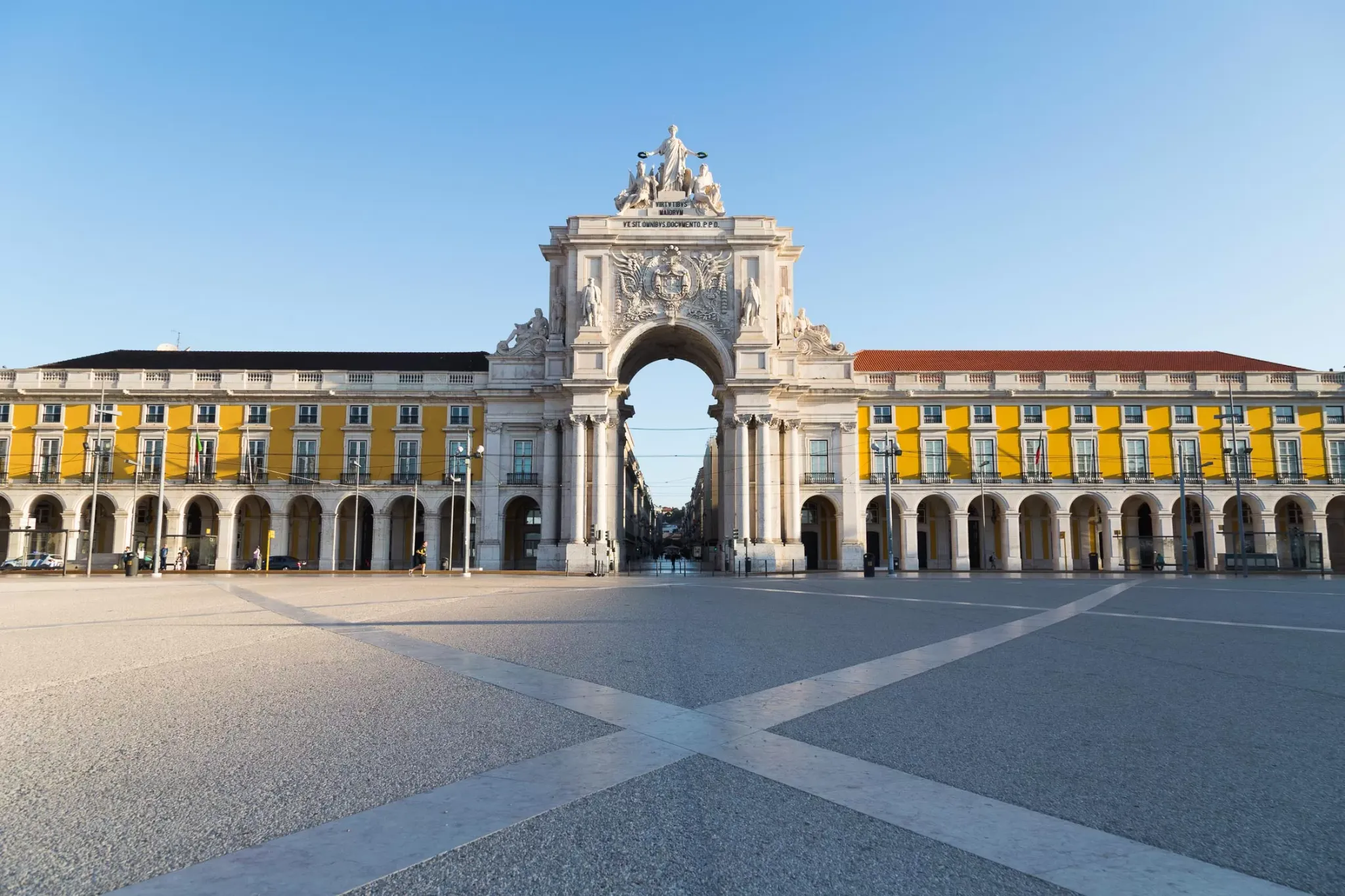
Explore Alfama, Belem, the Praca do Comercio waterfront and the historic layers of Portugal’s capital.
Hands-on professional learning
Bring active learning methods, peer exchange and classroom-ready ideas back to your institution.
Creative city life
Discover museums, neighbourhood cafés, gardens and the Tagus riverfront after course sessions.
Learn in Lisbon. Discover new perspectives.
From the historic streets of Alfama to the Belém waterfront, Lisbon connects European educators with the heritage and contemporary culture of Portugal’s capital.
A city shaped by exploration, culture and ideas.
From Roman Olisipo to maritime history and contemporary creativity, Lisbon brings together centuries of urban life and international exchange.
From Olisipo to Alfama
The Roman settlement of Olisipo and the medieval hilltop neighbourhoods shaped Lisbon’s early urban character.
Discover more +
Lisbon developed around the Tagus estuary, with layers of Roman, Islamic and later Portuguese heritage visible in its street patterns and historic buildings.
Maritime discoveries and the Tagus
Belém recalls Lisbon’s central role in early modern maritime exploration, trade and cultural exchange.
Discover more +
The Jerónimos Monastery and Belém Tower, recognised by UNESCO, reflect this era and its enduring cultural legacy.
Rebuilding, tiles and new perspectives
After the 1755 earthquake, the Baixa district was rebuilt on a planned street grid.
Discover more +
Lisbon combines historic tiles, tramways, museums and modern creative neighbourhoods with a diverse international education community.
Plan your Erasmus+ training with confidence.
Practical guidance for educators and Erasmus+ coordinators preparing staff mobility to Lisbon, Portugal.
Who can participate?
Our structured courses are designed for educators and education professionals. Check each programme for its intended audience, teaching language and recommended entry level.
Course format and learning outcomes
Training normally combines interactive workshops, collaborative activities, professional exchange and practical methods to apply after returning home. Exact duration, daily schedule, objectives and included cultural activities are shown on individual course pages.
Erasmus+ funding and course fees
Erasmus+ grant support: Depending on your approved mobility project and applicable Erasmus+ rules, funding may cover course fees and contribute towards travel and individual support for accommodation and meals. Your sending organisation confirms eligibility, grant amounts and reimbursement conditions.
Included in our course fee: Structured training, pedagogical and mobility coordination, course administration, training-related logistics, teaching methodologies, learning materials and applicable course documentation and certification.
Not included: Flights, accommodation, meals and personal expenses. We provide destination guides, practical travel information and accommodation suggestions to help participants plan their stay.
Certificates and documentation
Learning Together supports course-related mobility documentation and certificates, subject to participation and applicable requirements. Discuss Learning Agreements and Europass documentation with your mobility coordinator.
Everything you need for your stay.
Plan your arrival, accommodation and free time in Lisbon after your course is confirmed.
Getting here & local transport
Humberto Delgado Airport (LIS) connects Lisbon with European and international cities. The airport Metro station links to the Red Line; confirm service updates before travelling.
- Metro from the airport: The Red Line runs from Aeroporto towards Saldanha and connects with other metro lines. Allow time for transfers and check the official service notices.
- Taxis and ride-hailing: Official taxis operate at the airport; licensed ride-hailing collection areas can differ from the taxi rank. Confirm the correct pickup point in your booking app.
- Getting around: Metro, Carris buses and trams serve the city. Walking is practical in many central districts, but Lisbon has steep streets and cobblestones.
- Main rail stations: Oriente and Santa Apolonia serve long-distance trains; Cais do Sodre and Rossio provide useful suburban rail connections.
Accommodation & stay
Following your confirmed registration, Learning Together can share practical accommodation guidance for the assigned Lisbon training venue.
- IMPORTANT: Do not book flights or accommodation until you have contacted Learning Together, completed full registration and received written confirmation of the course, dates and venue.
- Convenient districts: Saldanha, Marques de Pombal, Avenida and nearby metro-connected areas may be practical depending on the actual training address.
- What to check: Prioritise distance to the confirmed venue, transport access, cancellation policies and any mobility or accessibility requirements.
- Course location: Training takes place at selected venues in Lisbon; the location is provided for the specific edition and may differ between courses.
Lisbon food & culture
Lisbon brings together traditional Portuguese cuisine, neighbourhood cafes and riverside restaurants, offering varied options around morning training.
- Local classics: Try bacalhau dishes, grilled sardines in season, caldo verde and Portuguese petiscos.
- Sweet traditions: Pastel de nata is a Lisbon favourite; historic pastry shops and neighbourhood bakeries are easy to find.
- Markets and food halls: Mercado da Ribeira and local municipal markets provide options for informal meals and regional products.
- Entertainment: Explore Fado traditions, tilework (azulejos), flea markets, seasonal cultural events like Santos (Saint Anthony) week, nightlife in Pink Street and Bairro Alto.
What to see & do
Use your afternoons and weekends to discover the city and nearby cultural destinations at your own pace.
- Historic centre: Explore Alfama, Castelo de Sao Jorge, the Baixa district and Praca do Comercio.
- Belem heritage: Visit the Jeronimos Monastery, Belem waterfront and the Monument to the Discoveries; reserve time for travel and visitor queues.
- Museums and viewpoints: Consider the National Tile Museum, Gulbenkian collections, Lisbon Oceanarium, Miradouro da Senhora do Monte and other city museums.
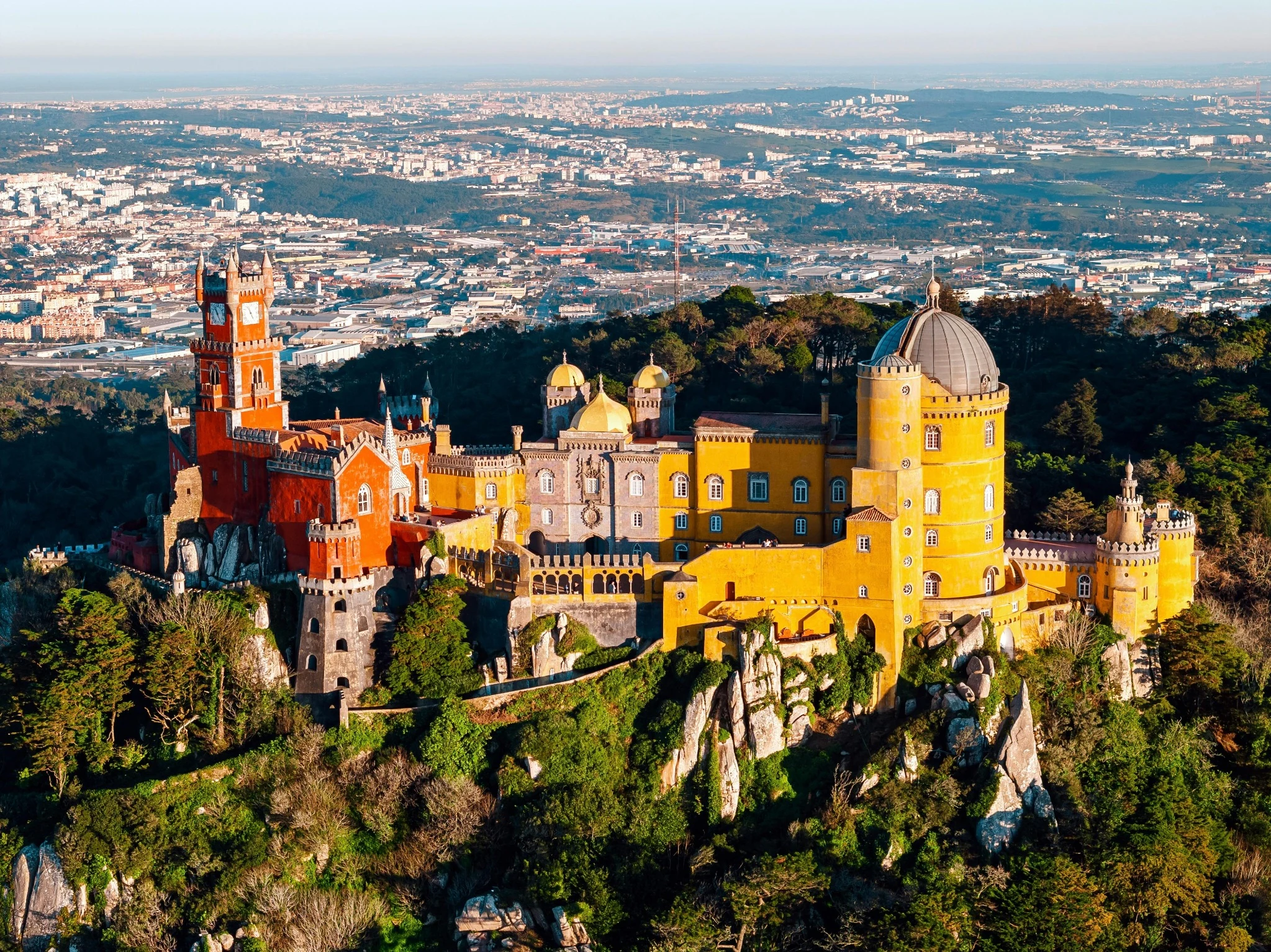
- Beyond Lisbon: Sintra, Pena Palace, Quinta da Regaleira, Cascais, Surfing in Costa da Caparica are popular day trips by rail, with journey times and access depending on the itinerary.
Inspiration beyond the classroom.
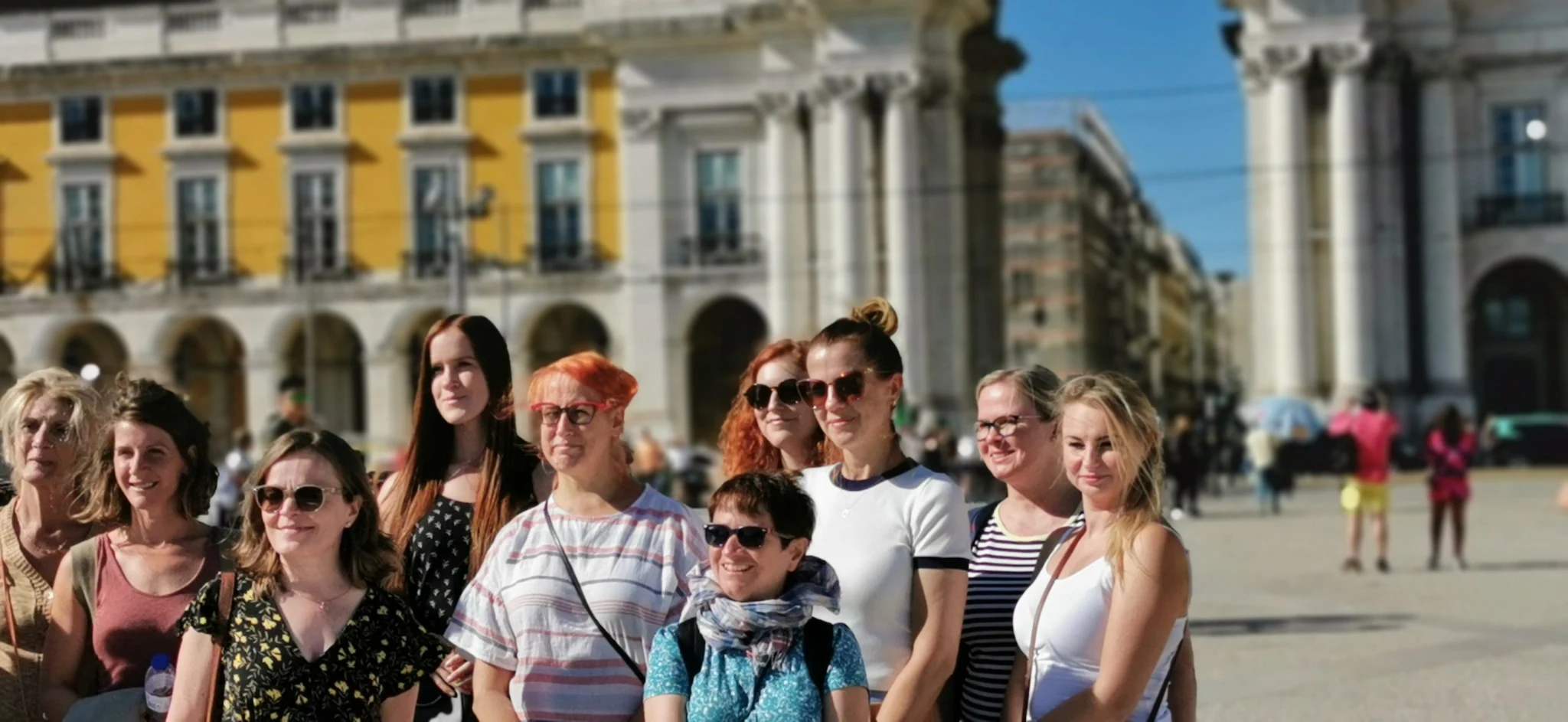
From Praca do Comercio to classic yellow trams and nearby cultural landmarks, Lisbon offers an inspiring setting beyond the training room.

Erasmus+ Lisbon FAQs.
Answers to frequently asked questions about Erasmus+ KA1 training and mobility in Lisbon.
Where does Erasmus+ training in Lisbon take place?
Training takes place at selected Lisbon venues, with the exact address confirmed for each edition after full registration. Do not book travel before written confirmation.
Can an Erasmus+ KA1 grant cover these courses?
Eligibility depends on the approved project, applicable Erasmus+ rules and your sending organisation. Confirm grant and reimbursement arrangements with your coordinator.
Where can I check confirmed Lisbon course dates?
Consult the official Learning Together calendar and the individual course page.
How long are courses in Lisbon?
Training length depends on the individual edition and may be five or six days. Consult the course programme for exact times and included cultural activities.
Are travel, meals and accommodation included?
No. Course fees cover the stated training and related services; flights, accommodation and meals are arranged separately. Erasmus+ grants may support eligible costs.
Can schools register teams or request mobility documents?
Yes. Contact Learning Together to discuss group participation, Learning Agreements, certificates and applicable documentation.
Considering another Erasmus+ destination?
Compare European training opportunities across Portugal, Spain and Poland.
Your next Erasmus+ experience could start in Lisbon.
Discover structured training, connect with European educators and explore Lisbon, Portugal.
All Courses in Lisbon
 ◷
5 / 6 days
Teaching with AI – Tools and Techniques
Test AI tools for lesson planning, classroom resources and teaching techniques. Explore critical evaluation and practical integration in daily lessons.
 ◷
5 / 6 days
ChatGPT – How to Handle AI in Schools
Practise using ChatGPT and generative AI for lesson planning, classroom activities and responsible school use. Review accuracy, ethics and digital literacy.
 ◷
5 / 6 days
Outdoor Education – Nature as a Learning Space
Design inclusive outdoor learning activities using nature as a classroom. Explore place-based teaching, collaboration and reflection.
 ◷
5 / 6 days
AI for Innovative Teaching: Writing, Video, Audio
Produce teaching resources with generative AI for writing, images, audio and video. Explore creative lesson design, accessibility and responsible use.
 ◷
5 days
Wellbeing First – Stress Relief Strategies
Practise accessible stress-relief techniques, reflection and wellbeing routines for educators facing classroom demands and professional overload.
 ◷
5 / 6 days
AI Assistant for Teachers and Trainers
Explore AI assistants for lesson planning, communication and workload management. Practise responsible use of ChatGPT, Copilot and related tools.
 ◷
5 days
Positive Learning and Wellbeing in Schools
Explore positive education, classroom belonging and practical wellbeing routines. Build strategies that support participation and relationships.
 ◷
5 days
AI Chatbots in Education
Build and evaluate educational AI chatbots and virtual tutors with accessible no-code tools. Explore personalised support, privacy and classroom use.
 ◷
5 days
Cheerful Classroom – Joy in Learning
Explore positive classroom routines, motivation and creative activities that support joyful, participatory learning and stronger teacher-student relationships.
 ◷
5 days
AI Prompt Engineering for Educators
Develop reusable prompts for lesson planning, feedback and classroom resources. Practise prompting frameworks, quality checks and responsible AI use.
 ◷
5 / 6 days
Building a Sustainable Future
Explore climate awareness and environmental education through collaborative activities. Design practical sustainability ideas for your school.
 ◷
5 days
Educating Climate Changemakers
Equip students to investigate climate challenges and design practical action. Explore participatory climate education and student-led projects.
 ◷
5 / 6 days
Sustainable Schools – Reducing Waste
Explore school waste reduction and sustainability education. Design practical student projects that promote responsible consumption and action.
 ◷
5 / 6 days
Advanced AI Assistant – Workflows and Automation
Design responsible AI assistants and auditable workflows for schools. Practise knowledge grounding, no-code automation and human oversight in this advanced course.
 ◷
5 / 6 days
Advanced AI in Education – Multimodal Media Production
Create coherent educational media using AI text, images, audio and video. Develop accessible production workflows with editorial and ethical oversight.
 ◷
5 / 6 days
Advanced English Training (B2 to C1)
Improve professional English fluency, accuracy and communication through discussions, presentations and intercultural practice with European peers.
 ◷
5 / 6 days
Advanced Teaching with AI – Pedagogy and Assessment
This training course aims to equip educators with a robust understanding of Artificial Intelligence (AI) and Information and Communication Technology (ICT) as transformative tools in educational settings.
 ◷
5 / 6 days
AI for All – Inclusion in Education and Work
Use assistive AI tools to improve accessibility and inclusion in education and work. Practise captioning, translation and adaptive learning support.
 ◷
5 / 6 days
Coaching – A Powerful Tool
Explore the GROW model, active listening and effective questioning. Practise coaching conversations that support motivation and professional relationships.
 ◷
5 days
Communicating Under Pressure
Practise clear, constructive communication during parent meetings, school conflicts and difficult conversations. Develop confident responses under pressure.
 ◷
5 days
Communicating with Impact
Strengthen persuasive, clear and inclusive communication in classrooms, staff meetings and European projects through practical exercises and feedback.
 ◷
5 days
Communicative Skills for European Teachers
Develop classroom communication, active listening and interpersonal skills. Explore practical approaches for working with students, parents and colleagues.
 ◷
5 days
Creating Emotionally Safe Classrooms
Create emotionally supportive classrooms with practical routines for trust, inclusion and positive relationships. Explore ways to respond to learner needs.
 ◷
5 / 6 days
Critical Thinking and Problem Solving in Education
Teach evidence evaluation, reasoning and structured problem solving with classroom routines, discussion protocols and authentic challenges.
 ◷
5 days
Cyber Security
Explore safer internet use, digital threats and practical cyber safety habits for schools. Support students in protecting privacy and online identities.
 ◷
5 days
Digital Pedagogy and AI Innovation
Use AI tools and digital pedagogy to plan engaging lessons, assess learning and make informed ethical decisions in classroom practice.
Digital Tools in a Digital Classroom
Explore practical ICT tools for lesson design, digital collaboration and active learning. Build confidence using technology across classroom tasks.
 ◷
5 days
Early Childhood Innovation in STEM
Bring low-screen STEM activities into kindergarten and early primary learning. Practise age-appropriate inquiry, making and problem-solving tasks.
 ◷
5 / 6 days
Emotional Intelligence
Develop emotional self-awareness, regulation and empathy in school relationships. Practise strategies for classroom communication and wellbeing.
 ◷
5 days
Empathic Communication – Listen, Engage, Inspire
Practise active listening, empathy and inclusive conversations to strengthen understanding with students, families and multicultural school teams.
 ◷
5 days
English Language for Teachers
Build practical English speaking, vocabulary and pronunciation for classroom and international communication through interactive language practice.
 ◷
5 days
European Cultural Routes, History and Values in Education
Explore heritage, European history and cultural routes as educational resources. Connect place-based learning with shared values and classroom practice.
 ◷
5 days
Gamification in STEM Education
Use game mechanics, challenges and storytelling in STEM lessons. Design practical activities to motivate learners and support participation.
 ◷
5 / 6 days
How to Energize Your Lessons
Practise active learning methods, classroom interaction and motivating lesson routines to increase student participation and engagement.
 ◷
5 days
Immersive Learning – AR and VR Tools
Explore augmented and virtual reality for teaching through practical classroom scenarios, immersive resources and inclusive learning design.
 ◷
5 / 6 days
Integrating STEAM in the Classroom
Combine science, technology, engineering, arts and maths through inquiry and design-based activities. Plan hands-on STEAM teaching tasks.
 ◷
5 days
Integration – A Guidebook for the Future
Explore intercultural dialogue, integration and inclusive teaching through collaborative activities that connect European experiences and classrooms.
 ◷
5 / 6 days
Interpersonal Relationships and Communication
Strengthen interpersonal communication, trust and constructive relationships with students, families and school teams through practical exercises.
 ◷
5 / 6 days
Leadership and Conflict Management
Develop school leadership and conflict-management skills through practical scenarios, communication activities and constructive team approaches.
 ◷
5 days
Meaningful Communication for Inclusive and International Classrooms
Practise inclusive communication for multicultural and international classrooms. Explore accessible language, active listening and shared understanding.
 ◷
5 days
Mental Health In Education
Explore mental health literacy, school wellbeing and practical support strategies for teachers. Learn to identify challenges within professional roles.
 ◷
5 / 6 days
NLP Coaching for Educators
Explore NLP-informed coaching, listening and communication techniques for educational relationships through practical reflective activities.
Portugal
Explore Erasmus+ courses for teachers in Portugal. Choose practical training in AI, digital education, wellbeing, leadership and sustainability.
 ◷
5 / 6 days
Positive Psychology in Education
Apply strengths-based positive psychology and the PERMA model to classroom routines, staff wellbeing and supportive school environments.
 ◷
5 days
School Digital Detox and Social Media Hygiene
Explore healthier social media habits and school digital culture. Plan ways to reduce distraction, digital overload and exclusion in learning.
 ◷
5 days
Science Education – Hands-On Classroom
Explore accessible experiments, inquiry and practical science lessons that develop curiosity and active participation in the classroom.
◷
5 days
Spanish Language for Beginners
Start speaking Spanish with practical vocabulary, listening and everyday communication exercises designed for beginners in an international setting.
 ◷
5 / 6 days
Speak to Connect – Building Trust in Schools
Practise trust-building dialogue, purposeful listening and relational communication with students, families and colleagues in educational settings.
 ◷
5 days
Strong Teams, Stronger Schools
Explore school teamwork, staff communication and collaborative leadership through practical challenges and strategies for stronger teams.
 ◷
5 days
Teacher Burnout Prevention and Digital Wellbeing
Explore workload boundaries, digital overload and practical wellbeing strategies for teachers. Develop healthier approaches to school technology use.
 ◷
5 days
United in Values – Democracy, Inclusion and Civic Action
Explore democratic values, inclusion, media awareness and participatory civic activities to strengthen European citizenship education.